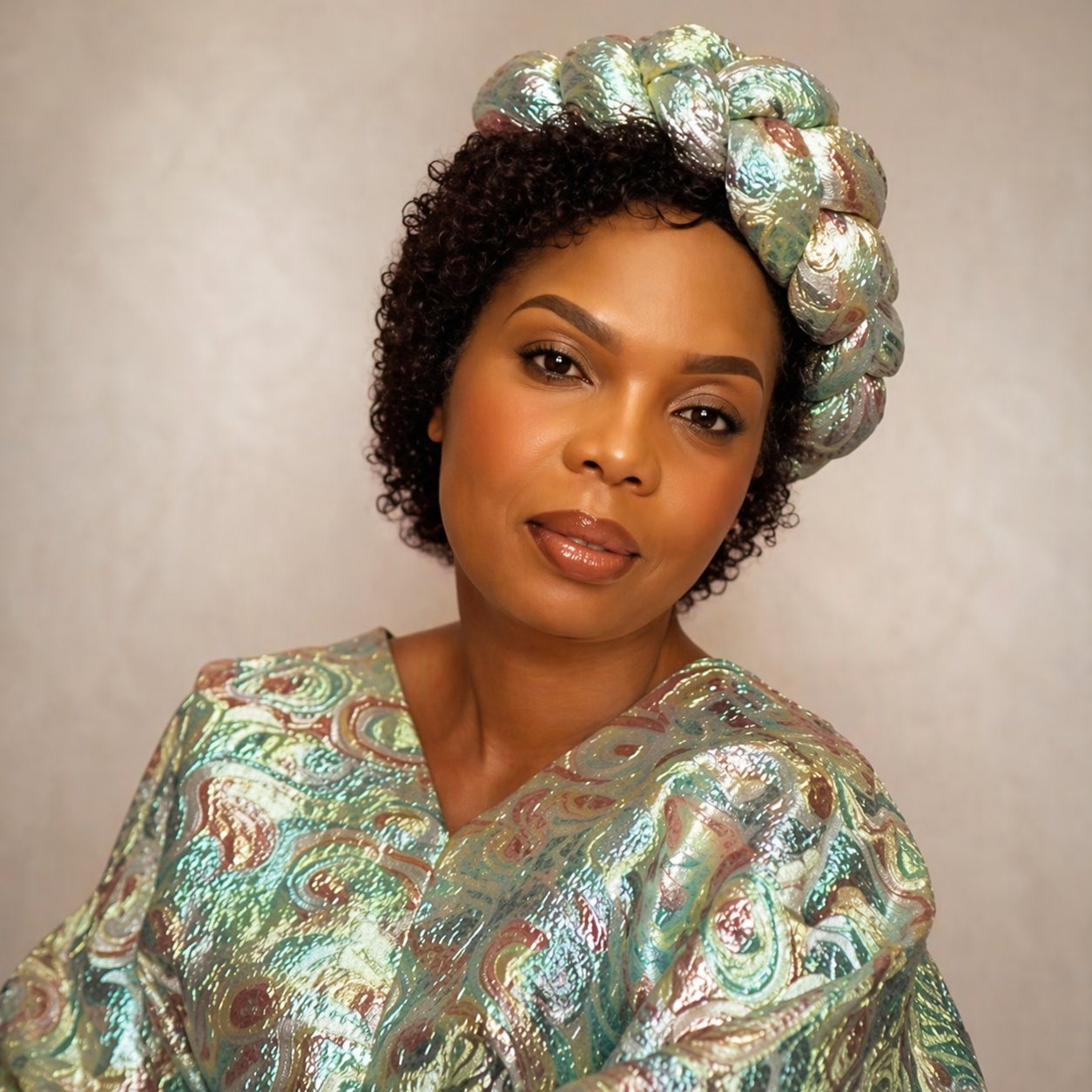
Pastor Gaudencia Aaron
Founder · Board Chair · Project Director
She carries the Foundation's child- and youth-centred mission, pastoral legitimacy, community relationships, family-facing trust, mission culture and community-rooted service.
About Genette Foundation
Genette Foundation is a Tanzania-registered, independently governed, child- and youth-centred non-profit institution, established in Dodoma with the support of House of Glory International Church. The Foundation exists to protect vulnerable children, strengthen families, educate young people, build youth enterprise, restore land, and create a durable pathway from vulnerability to productive adulthood. The Foundation is faith-rooted in origin and donor-accountable in delivery. Its operating model is non-discriminatory. Its institutional design is being built to outlive its founders.
The origin
The Genette Foundation began with a birthday and a refusal to look away.
For more than three decades, Pastor Gaudencia Aaron has marked her birthday by visiting children whose lives ask more of the world than the world has yet given them. Some years it was orphans. Some years it was children with severe disabilities. Some years it was children of families struggling under loads they did not choose. The pattern was the same. A pastor walked into a place where vulnerable children lived. She listened. She prayed. She gave what she could. And then she went back to her congregation at House of Glory International Church in Dodoma, where the rest of the work waited.
On one such birthday, the visit was to a children's disability care centre in Miyuji, Dodoma. The children at the centre lived with severe disabilities. Some had been abandoned. Some had families who came when they could. All of them lived in conditions that no one in the room — pastor, caregivers, parents — could pretend were adequate to the dignity of the children they served.
The lesson was clear: the need was larger than one visit, one congregation, one pastor, or one act of kindness. It required an institution.
The founders
Genette Foundation began through two contributions, different in shape but equal in institutional importance.
THE FIRST CONTRIBUTION
Founder · Board Chair · Project Director. Founding pastoral burden carried across more than three decades of service to vulnerable children through House of Glory International Church. Community trust, family-facing legitimacy and the child-centred mission. The first institutional commitment was hers: a 3.17-hectare property in Nala, Dodoma, held personally with her family for more than a decade, committed as the founding gift to the institution that would become Genette Foundation.
THE SECOND CONTRIBUTION
Co-Founder · Secretary of the Board · Strategic Director. Governance discipline, donor accountability, systems design and institutional readiness. More than three decades of institutional systems experience, including thirteen years with the United Nations World Food Programme Tanzania and two years with World Vision Tanzania, in donor-accountable operations, supply chain, ICT, data, procurement, logistics, audit and reporting.
Together, they form the institution now being built: founding vision and community trust on one side, governance discipline and donor-readiness architecture on the other.
The name
The name expresses the Foundation's conviction that grace must become visible in the life of a child protected, a family strengthened, a young person trained, a mother cared for, a student sponsored, a farmer connected to markets, and a community given a future. The institutional commitment is to make that grace not abstract, but operational.
The visual identity
The Foundation's visual identity carries the same message as the name.
THE INSTITUTIONAL FRAME
Represents Genette as the protecting institutional frame: the institution that holds, shelters and gives structure to care.
THE CENTRE
Represents the Foundation's first commitment. Vulnerable children are not peripheral to the mission; they are the centre of it.
PROTECTION
Represents protection, care, practical service, and the responsibility to stand with children and families until stability is restored.
GROWTH
Represents growth, restoration, education, agriculture and environmental stewardship. It connects to Genette Green Future, the Foundation's environmental stewardship and climate-resilience programme.
GRACE AND ASPIRATION
Represent grace, hope, divine guidance, aspiration and transformation. Together with the centre mark, they hold the institution's full identity: grace, protection, growth and transformation.
Navy
Trust, governance, seriousness, institutional discipline.
Teal & green
Life, renewal, health, growth, restoration.
Gold
Dignity, excellence, value, faith.
Founding support, not parentage
Established with the support of House of Glory International Church (HGIC; Registration No. S.A 18635), recognised as the founding spiritual and community anchor, not the parent institution.
House of Glory International Church provided the spiritual and community ground from which the Foundation emerged. The long pastoral work of Pastor Gaudencia Aaron, the church's community relationships, and the trust built through years of service form part of the Foundation's origin. That founding support is acknowledged with gratitude and without ambiguity.
HGIC remains the founding spiritual and community anchor. Genette Foundation is the independently governed institution responsible for implementation, donor accountability, safeguarding, financial management, procurement, reporting and long-term institutional development.
The Foundation is not a church department, not an informal ministry arm, and not a project operating through another institution's governance. Faith gives the Foundation its founding burden and moral seriousness. Professional governance is being built to give the Foundation the safeguarding, financial control, audit, procurement, HR, MEAL and donor-accountability systems required to protect that mission as it grows.
Leadership
During the Establishment Phase, the Foundation is led through its Co-Leadership Dual-Engine while the wider Tanzanian Board of Trustees is being constituted.
Founder · Board Chair · Project Director
She carries the Foundation's child- and youth-centred mission, pastoral legitimacy, community relationships, family-facing trust, mission culture and community-rooted service.

Co-Founder · Secretary of the Board · Strategic Director
He carries institutional design, governance discipline, fiduciary systems, donor positioning, external partnerships, documentation, reporting architecture, donor-facing accountability and institutional readiness.
Why two engines. The Co-Leadership model is designed to reduce leadership-concentration risk and to combine founding vision, community trust, institutional governance, donor accountability and operational discipline. The Foundation is neither only a pastoral initiative nor only a technical institution. It is both: a mission born from compassion and a system being built for accountability.
Values
The Foundation operates on a small set of values that travel with the institution across every function, every site, and every partnership.
VALUE 01
The dignity, protection, development and future of vulnerable children and young people are the institution's first commitment. Every decision is tested against that commitment.
VALUE 02
Tanzanian leadership, Tanzanian Board, Tanzanian accountability, Tanzanian outcomes, supported by international partnership where it genuinely strengthens the institution.
VALUE 03
Institutional discipline being built from inception toward the standards expected by serious donors, foundations, churches, public institutions and technical partners.
VALUE 04
One population, one governance architecture, one safeguarding framework and one continuous pathway from vulnerable childhood to educated, skilled, healthy and productive adulthood.
VALUE 05
Confirmed and contingent commitments named separately. Risks named alongside ambition. Sustainability named honestly.
VALUE 06
Institutional permanence as a design constraint, not an aspiration.
Who the Foundation serves
Genette Foundation serves vulnerable children, youth, families, women, persons with disabilities, farming households and surrounding communities regardless of religion, ethnicity, gender, disability, income or background. The faith-rooted origin informs the institution's moral seriousness. It does not create a condition for access to services.
No child, young person, family or household is denied or conditioned support based on belief, identity or affiliation. The principle will be documented in policy, applied in selection, monitored in delivery and reported through accountability systems as the Foundation's operating framework is built.
For partners
Faith-rooted partners can see the origin, burden and moral formation of the institution. Institutional donors can see that governance, safeguarding, non-discrimination, fiduciary controls and professional delivery are being engineered from inception, not retrofitted later. Public-sector stakeholders can see that Genette Foundation is Tanzanian-led, independently governed and aligned to public development priorities.
The Foundation is not asking partners to choose between compassion and discipline. Its central claim is that compassion without discipline cannot protect children at scale, and discipline without compassion cannot carry the burden that gave the Foundation life.